
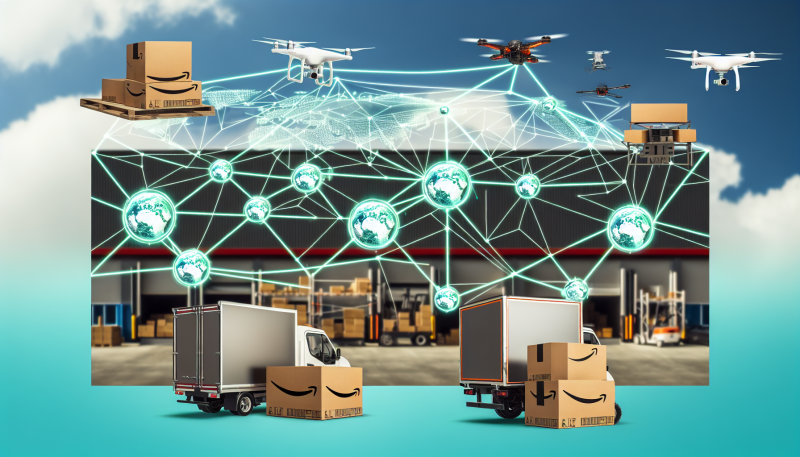
In the fiercely competitive world of e-commerce, Amazon emerges as a towering figure, not just for its vast product assortment but significantly due to its unparalleled logistics network. This robust system is precisely what enables Amazon to offer unmatched convenience and reliability to its global customer base. Understanding Amazon's logistics prowess provides crucial insights into why this e-commerce giant remains ahead of the curve.
Evolution of Amazon’s Logistics Network
Amazon began its operations in 1994 primarily as an online bookstore. From these humble beginnings, Amazon rapidly evolved, revolutionizing logistics in the e-commerce sphere. Instead of outsourcing delivery, Amazon invested heavily in developing an expansive logistics network. This investment enabled Amazon to manage the entire delivery process, ensuring efficiency, reduced costs, and customer satisfaction.
The Role of Fulfillment Centers
Fulfillment centers are at the heart of Amazon’s logistics mastery. Strategically located around the globe, these centers are massive warehouses where products are stored, sorted, packed, and shipped. With more than 175 fulfillment centers worldwide, Amazon is able to store a vast inventory, enabling faster delivery times. These centers are equipped with advanced technologies, including machine learning and automation, to streamline operations and minimize errors.
Amazon Prime: A Game-Changer
Amazon Prime, launched in 2005, is a testament to Amazon’s logistic capabilities. Prime customers enjoy guaranteed two-day shipping on millions of products and, in some areas, even same-day or next-day delivery. This remarkable speed is made possible by Amazon’s vast network of fulfillment centers and sophisticated routing technology. Such benefits significantly enhance customer loyalty and retention, giving Amazon a competitive edge in the e-commerce world.
Advanced Technology Integration
A significant factor in Amazon’s logistics efficiency is its integration of advanced technologies. Amazon leverages AI and machine learning to predict product demand, optimize delivery routes, and manage inventory. Furthermore, the use of robots in warehouses not only speeds up the picking and packing process but also improves accuracy. The recent introduction of drone delivery signifies Amazon’s commitment to staying at the forefront of logistics innovation.
The Last-Mile Delivery Challenge
Last-mile delivery, the final step of the delivery process from the fulfillment center to the customer's doorstep, presents a complex challenge in e-commerce logistics. Amazon has invested in a variety of solutions to overcome this hurdle. From employing local delivery services to establishing its own fleet of Amazon delivery vehicles and drivers, the company ensures timely and efficient delivery. Programs like Amazon Flex tap into the gig economy, allowing drivers to deliver packages using their own vehicles, further streamlining the last-mile delivery.
Impact of COVID-19 on Amazon Logistics
The COVID-19 pandemic significantly impacted global supply chains. However, Amazon’s logistics network demonstrated resilience and adaptability. With a surge in online shopping, Amazon quickly scaled its operations. By hiring thousands of additional workers and ramping up safety protocols in fulfillment centers, Amazon ensured that deliveries continued with minimal disruption, maintaining its reliability in uncertain times.
Sustainability in Amazon’s Logistics
In recent years, Amazon has taken significant steps towards sustainability in logistics. The company’s Shipment Zero initiative aims to make all Amazon shipments net-zero carbon, with 50% of all shipments achieving this goal by 2030. Innovations such as electric delivery vehicles and investments in renewable energy underline Amazon’s commitment to reducing the environmental impact of its massive logistics operations.
Global Reach and Local Adaptation
Amazon’s logistics network extends far beyond the United States. Its global reach ensures that millions of customers worldwide enjoy the same reliable and speedy service. However, Amazon also adapts its logistics strategies to fit local markets. This adaptability includes working with regional delivery services and tailoring fulfillment operations to meet specific demand patterns and regulatory requirements.
The Future of Amazon Logistics
Looking ahead, Amazon continues to innovate and expand its logistics capabilities. The introduction of autonomous vehicles, further integration of AI, and expansion of drone delivery are just a few of Amazon's futuristic endeavors. As the company seeks to anticipate consumer needs and global trends, its logistics network will likely play an ever-essential role in maintaining its leading position in the e-commerce industry.
Conclusion
As we delve deeper into the various facets of Amazon’s logistics network, it becomes evident why this e-commerce giant remains a leader in the industry. Their relentless pursuit of speed, efficiency, and innovation, coupled with a strong focus on customer satisfaction and sustainability, underscores a logistics strategy that truly sets Amazon apart in the e-commerce world.